
By Salvatore DiFalco
Maintenance received a call from one of the bio-labs to come and replace a panel of flickering fluorescent lights. They were upsetting the mouse. “The mouse?” I asked Jerry, the shift boss. I’d only been working at the Polytechnic Institute for two weeks and barely knew my way around its brutalist, labyrinthine layout, let alone familiarised myself with its machinations. One thing was certain, they’d spared no concrete — if not architectural cruelty — constructing the joint.
Jerry chuckled. “They’ve got a special mouse up in bio-lab 14,” he said. “Something like an uber-maus. Roided up, I’d guess. This Dr. Ashbery from Stanford runs things. I hear he’s a bit of a mad scientist. But I don’t ask too many questions, you know.” He touched his temple as though a brilliancy sprang to mind. “Hey,” he said, “why don’t you go up to bio-lab 14, replace those lights — and you can meet the mouse yourself?”
His tone disquieted me for some reason. “What’s so special about the mouse?” I asked.
“Nothing as far as I could tell with the naked eye,” Jerry said. “But something’s up with it.”
I went to the utility room and grabbed a foldable stepladder and a box of fluorescent lamps. I made my way up to bio-lab 14 — on the seventh floor — and a gaunt man in a white coat behind a blinking console buzzed open the reinforced steel door. A light panel in the middle of the lab was on the fritz. The man in the white coat approached me.
“I’m Dr. Ashbery,” he said. “How long will this take? The mouse is in distress, as am I.”
“It’ll be just a jiffy,” I said, glancing at the cage housing the mouse as I unfolded my stepladder.
The little grey mouse in the cage appeared normal, except it kept staring at me. I mean, its moist black eyes locked on to me the moment I stepped into the lab and had not looked away. Its forepaws even grasped the cage wire like the tiny hands of a Lilliputian prisoner. No matter where I stood, and even as I mounted the stepladder, I could still feel those beady black eyes peering at me.
I completed the task, restoring normal luminescence, and presumably saving the mouse from further distress or an epileptic seizure. The mouse continued peering at me, though it had stopped clutching the cage wire and lightened the pitiful vibe.
“Does he have a name?” I asked.
Dr. Ashbery nodded. “He answers to Moses.”
“Looks like Moses wants to say something.”
Dr. Ashbery smiled. “He does. He does want to communicate. He’s aching to do so. But we’ve yet to figure out a way. Of course he lacks a voice box — and his physiology also militates against any available sign language. In vain. Perhaps he can learn to tap a keyboard. That’s where the breakthrough will occur, I believe.”
What was he talking about here? Mickey Mouse goes to college? To my simple ears, it sounded like some freak-Frankenstein show. My confusion — indeed, alarm — must have been etched on my face.
“You see,” Dr. Ashbery explained, “since he was a foetus, Moses has been enriched with human neural and cerebral organoids.”
He what? This was all above my pay grade and perhaps more than my nervous system could endure. “So you think ...”
“That he has consciousness?” Dr. Ashbery sighed. “I believe so, yes.”
I shakily folded up my stepladder and glanced at Moses again. He winked at me.

About the Author
 Sicilian Canadian poet and storyteller Salvatore Difalco writes from Toronto Canada.
Recent appearances in Cafe Irreal, Heavy Feather Review and Euphony.

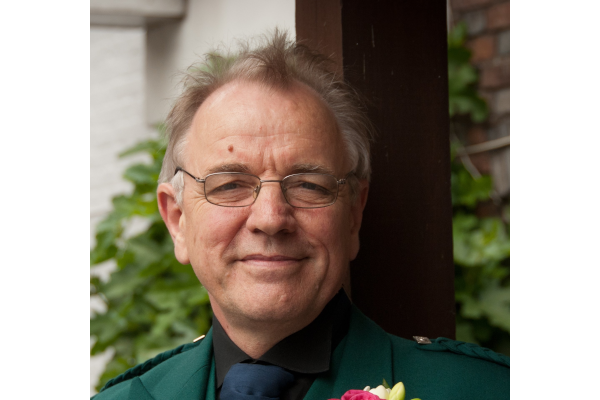
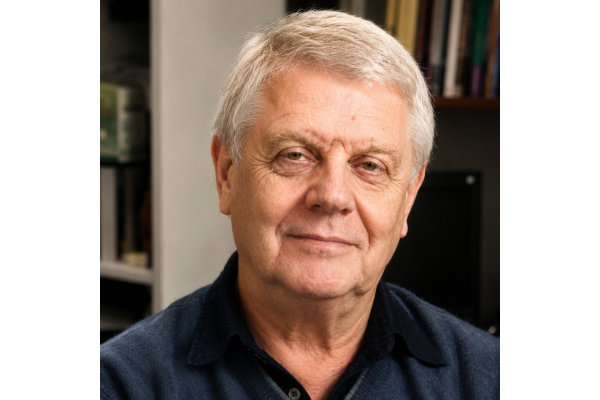
 Tim Borella is an Australian author, mainly of short speculative fiction published in anthologies, online and in podcasts.
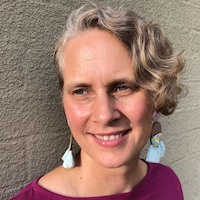 Merri Andrew writes poetry and short fiction, some of which has appeared in Cordite, Be:longing, Baby Teeth and Islet, among other places.
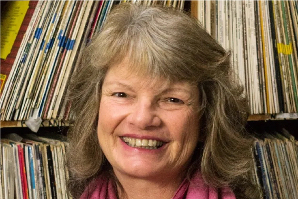 My time at Nambucca Valley Community Radio began back in 2016 after moving into the area from Sydney.
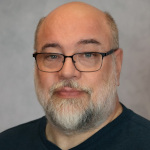 Tom Wrosch is a retired policy analyst with the State of Oregon, and resides with his wife in Salem.
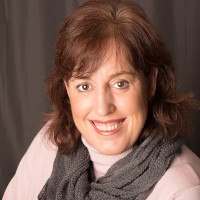 Geraldine Borella writes fiction for children, young adults and adults. Her work has been published by Deadset Press, IFWG Publishing, Wombat Books/Rhiza Edge, AHWA/Midnight Echo, Antipodean SF, Shacklebound Books, Black Ink Fiction, Paramour Ink Fiction, House of Loki and Raven & Drake
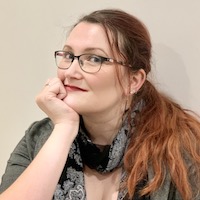 Emma Louise Gill (she/her) is a British-Australian spec fic writer and consumer of vast amounts of coffee. Brought up on a diet of English lit, she rebelled and now spends her time writing explosive space opera and other fantastical things in
 Ed lives with his wife plus a magical assortment of native animals in tropical North Queensland.
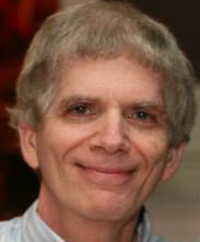 Barry Yedvobnick is a recently retired Biology Professor. He performed molecular biology and genetic research, and taught, at Emory University in Atlanta for 34 years. He is new to fiction writing, and enjoys taking real science a step or two beyond its known boundaries in his
 Mark is an astrophysicist and space scientist who worked on the Cassini/Huygens mission to Saturn. Following this he worked in computer consultancy, engineering, and high energy research (with a stint at the JET Fusion Torus).
 James Walton was a librarian, a farm labourer, and mostly a public sector union official.
 Tara Campbell is an award-winning writer, teacher, Kimbilio Fellow, fiction co-editor at Barrelhouse, and graduate of American University's MFA in Creative Writing.
 Alistair Lloyd is a Melbourne based writer and narrator who has been consuming good quality science fiction and fantasy most of his life.