
By Sergio Gaut vel Hartman
David Ben Yehuda heard voices, but he was not insane. He had refined that sense to such a degree that he could detect the instant a leaf detached itself from the oak tree and began its slow descent, swaying through the air, cradled by the wind.
He was not insane. He heard the horses long before they appeared over the hills, before they crossed the river. He knew who rode them and why they were coming. And when he knew, he ran and burst into the master’s house without touching the mezuzah. He shoved chairs and people aside and knocked the rabbi sprawling onto the floor.
“What is happening?” said the master once he managed to stand up. He looked at awkward David, his favourite student, behind a stern smile. He knew David was not insane, but somehow the boy’s impulses had to be restrained. Yet this time, he realised immediately, it was no minor matter. Naum Ben Simon read David’s face as though it were a Torah scroll: something terrible was happening.
“It is terrible,” David managed to say. “The count. Emich of Leisingen.”
Some words are fire, acid, poison. No Jew in the Rhineland ignored who Emich of Leisingen was, the bandit count. He and his men had ravaged the region for years. Their gangs took whatever they wanted, always brutally. But this time it was worse. The rabbi saw the crosses blazing in David’s eyes, smelled the blood, heard the groans; he too had once been a reckless and impetuous young man. But this was something different. Rumors had spread, and everyone knew the nobles were preparing to reclaim Jerusalem. Their Jerusalem? Our Jerusalem! Were they going to reclaim it for us? The rabbi looked again at David.
“Where could we go?” the master whimpered. “They will be everywhere, and they will say we killed their Lord and that we are guilty. There is nowhere to go.”
David stared at the rabbi as though he no longer recognised him and spat out the three words almost angrily.
“Did you teach me lies?”
He matured ten years in two minutes. David pointed toward the books stacked on the table and crowding the shelves.
“Are they all lies? Is wisdom a mangy dog? Is the Cabalah a dream, a delirium?” He drew a deep breath as though he were drowning. “Did you lie to me?”
Naum Ben Simon understood what David intended and answered the only way he could.
“Such things cannot simply be done. God must will it, He must inspire us. Is that what you are speaking of?”
“I am speaking of that,” said David, and aged another ten years. “Does God wish us to be slaughtered, for the count’s men to cut our throats and drink our blood?”
“If He allowed it... then it would be His Will, and we must obey it.” The rabbi looked up toward the ceiling, but David knew his gaze could pierce the beams and the tiles.
“If He allowed me to leave this place,” said David furiously through clenched teeth, “that too would be His will.”
“You will not do it,” said the rabbi weakly.
David turned his back on him. Naum Ben Simon understood that it was his duty to respect the young man’s wish, and he left the room, leaving him alone. He would not be the one to behead the boy’s hope, though there was no future for the Jews of Speyer.
The door closed and the sound of the rabbi’s footsteps faded down the corridor. David aged all the years he still lacked to reach wisdom and plunged into the folds of knowledge. He allowed his fine hearing to guide him toward the crossroads where commandments and proportions crackled; he smelled the numbers and tasted the signs, surrendering himself to the depths of the mechanism that sustains the harmony of the cosmos and gives it life. At last he saw it and touched it: there it was, absorbed, almost indifferent, playing with beings and suns. And he, David, the insignificant apprentice, managed to draw near and locate his own marks. He would never know whether he had deceived it or whether the Manipulator had merely permitted it. But David opened his eyes and was no longer in the rabbi’s study, no longer in Speyer; his fine hearing no longer caught the movements of the count’s murderers coming to slit the throats of the Jews beneath a cross devoid of charity and compassion.
Twilight had given way to a bright morning. In the distance, beyond the hills, slender columns of smoke could be seen. He climbed to the summit and looked down upon the valley. It was a settlement, a strange settlement surrounded by a wall of finely woven metal. He sharpened his hearing and listened to the voices, the cries, the groans, the shouted orders. But he could not understand the words. He descended the hill and saw shapes that soon became people dressed in vertically striped clothing, and others wearing dark garments and metal helmets. David was no fool and understood immediately that something was wrong in that place.
He shook his head and smiled.
They could not be worse than Count Emich of Leisingen and his bandits, he told himself.
He quickened his pace and walked resolutely toward the entrance gate, where in large strange letters someone had written, in recognisable German: „Arbeit macht frei”.

About the Author
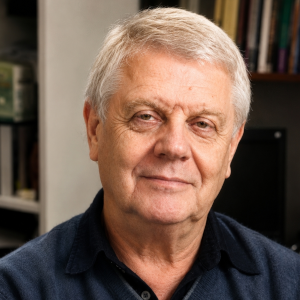
Sergio Gaut vel Hartman (Buenos Aires, Argentina, 1947) is a writer, editor, and anthologist. His first short story collection, Cuerpos descartables, was published in 1985 by Ediciones Minotauro. His novel El juego del tiempo was a finalist for the Minotauro Prize in 2005 and was later published in Mexico in 2018. Other notable books include Espejos en fuga (2009), Vuelos (2011), La quinta fase de la Luna (2018), Carne verdadera (2021), and El día que llegamos a Marte (2023). He also won the literary prize of La máquina que hace Ping! in 2017 with Avatares de un escarabajo pelotero.
He served for more than three years as literary director of the e-zine Axxón and has edited around twenty anthologies, including Ficciones en los 64 cuadros, Tricentenario, and Latinoamérica en breve. His short fiction has been translated into numerous languages, including English, French, Italian, German, Romanian, Japanese, Hebrew, and Arabic.

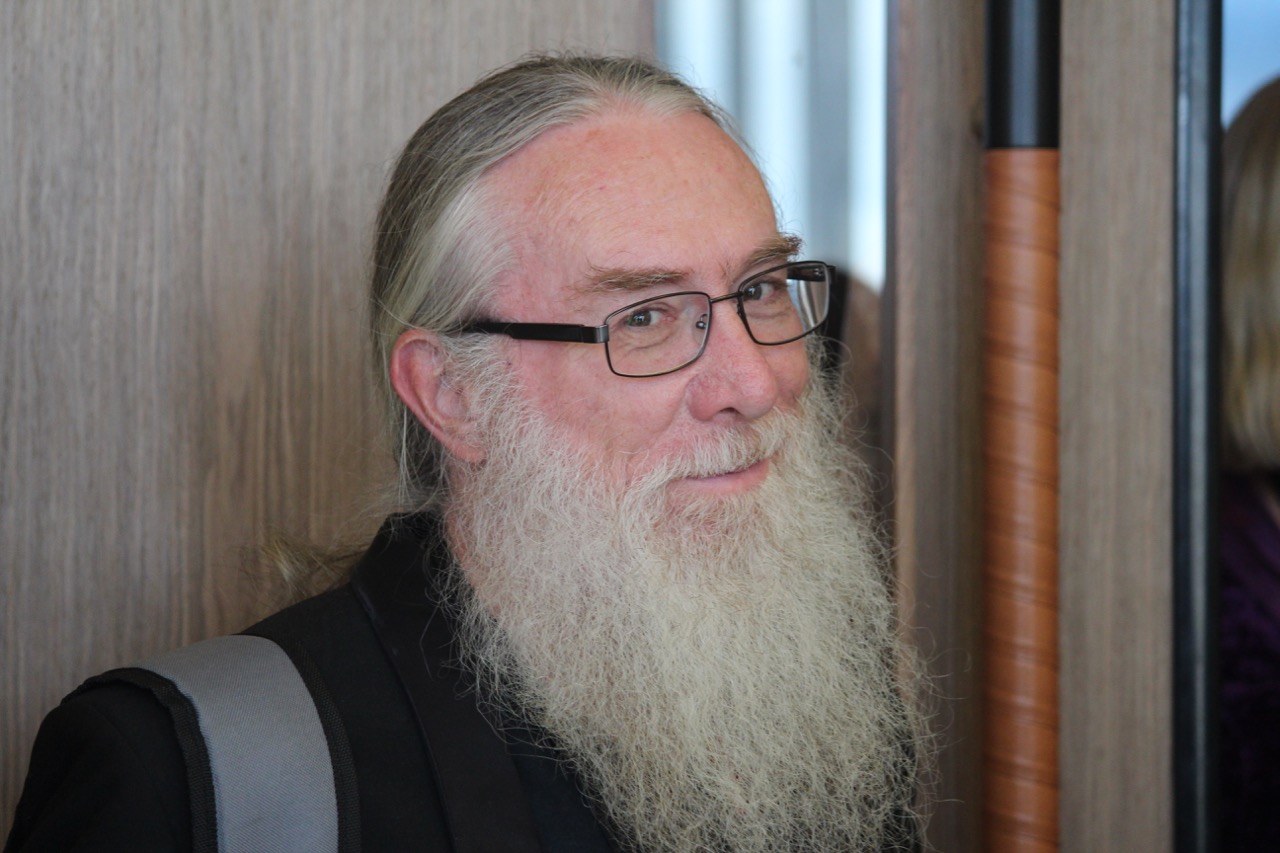







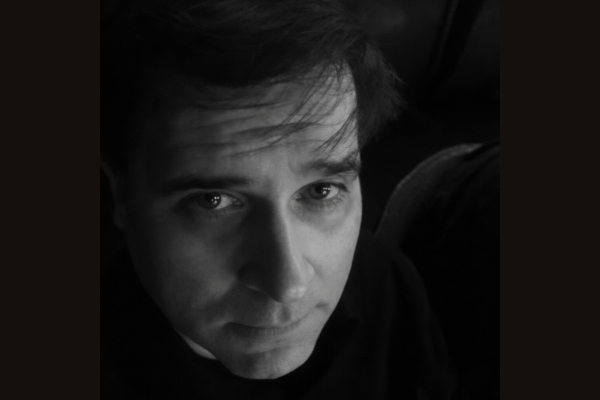


 Tom Wrosch is a retired policy analyst with the State of Oregon, and resides with his wife in Salem.
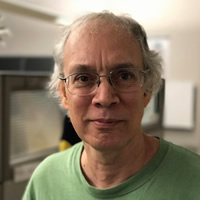 Brian Biswas lives in Chapel Hill, North Carolina, USA.
 Geraldine Borella writes fiction for children, young adults and adults. Her work has been published by Deadset Press, IFWG Publishing, Wombat Books/Rhiza Edge, AHWA/Midnight Echo, Antipodean SF, Shacklebound Books, Black Ink Fiction, Paramour Ink Fiction, House of Loki and Raven & Drake
 Alistair Lloyd is a Melbourne based writer and narrator who has been consuming good quality science fiction and fantasy most of his life.
 Sarah Jane Justice is an Adelaide-based fiction writer, poet, musician and spoken word artist.
 Tara Campbell is an award-winning writer, teacher, Kimbilio Fellow, fiction co-editor at Barrelhouse, and graduate of American University's MFA in Creative Writing.
 Emma Louise Gill (she/her) is a British-Australian spec fic writer and consumer of vast amounts of coffee. Brought up on a diet of English lit, she rebelled and now spends her time writing explosive space opera and other fantastical things in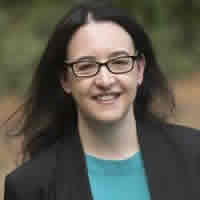
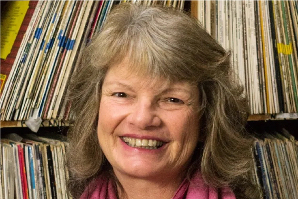 My time at Nambucca Valley Community Radio began back in 2016 after moving into the area from Sydney.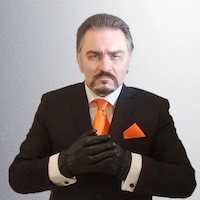
 Mark is an astrophysicist and space scientist who worked on the Cassini/Huygens mission to Saturn. Following this he worked in computer consultancy, engineering, and high energy research (with a stint at the JET Fusion Torus).
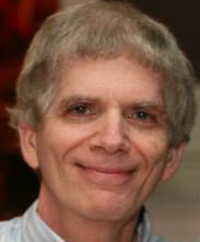 Barry Yedvobnick is a recently retired Biology Professor. He performed molecular biology and genetic research, and taught, at Emory University in Atlanta for 34 years. He is new to fiction writing, and enjoys taking real science a step or two beyond its known boundaries in his
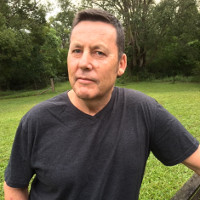 Tim Borella is an Australian author, mainly of short speculative fiction published in anthologies, online and in podcasts.
 James Walton was a librarian, a farm labourer, and mostly a public sector union official.
 Ed lives with his wife plus a magical assortment of native animals in tropical North Queensland.