By David Horn
We were supposed to measure time.
That was the joke.
The Department sent us west with two utes, a stack of chronometers, and a directive to “verify and correct the daylight-savings demarcation along the forty-first parallel.” No one had done it in decades. Clocks just adjusted themselves now, mostly. But the satellites were glitching — minutes slipping, calendars looping — so the Bureau wanted boots on the ground.
The ground, as it turned out, wasn’t where we left it.
I was team lead. Bureaucratically speaking, that meant nothing except that I got to sign the fuel chits. My partner, Jess, was younger but sharper, a surveyor who believed the desert could still surprise her. By day three she was right.
We first saw the shimmer at dusk, a faint wavering between fence posts, like heat haze without the heat. The air bent wrong there. Jess called it “the ripple.” I called it “someone else’s problem.” Then our GPS clocks drifted thirteen seconds apart, though they shared the same satellite feed.
We logged it and drove on.
By morning, the shimmer had moved.
It now ran through the saltbush plain like a thread of water, reflective, restless. Cattle avoided it. Flies refused to cross. When we approached, our shadows doubled. Jess tossed a pebble through. It vanished mid-arc, then reappeared behind us.
“Refraction,” I said, because that was the only word that made the air stop tightening around us.
We placed a beacon on either side. Both went silent by nightfall.
The Bureau’s guidance was to “maintain observation.” So, we camped close enough to hear it. Yes, hear. The line made sound: a thin electric murmur, like static played backward. It deepened near midnight. My watch lagged a minute; Jess’s leapt ahead two. The midpoint shimmered like a pulse.
At dawn, the shimmer had moved again — forty metres south, cutting through our tyre tracks, following the shadow of a ridge.
“It’s moving with the dark,” Jess said.
“It’s moving with the sun.”
“No,” she said. “Away from it.”
We followed. Every hour, the shimmer advanced. When it reached the shade of our canopy, the air hummed through the metal. The dashboard clock froze. The digital map flickered. Then it printed a new coordinate — one that didn’t exist.
I radioed in. Static replied.
Jess walked to the edge. Her outline split, one bright, one dim, as if the shimmer couldn’t decide which world to keep her in. She reached a hand across. It trembled, doubled, blurred.
“It’s colder there,” she said.
“Don’t cross.”
She didn’t. Not then.
We marked its course over three more days. Each night, it slipped closer to the horizon where the sun bled out — seeking the deep. It wasn’t tied to topography or temperature. It moved like migration.
I dreamed of it once: a ribbon of mercury sliding between stars, unspooling the difference between yesterday and tomorrow. When I woke, the air tasted of ozone and regret.
By the seventh day, Jess stopped sleeping. “What if this isn’t a boundary?” she said. “What if it’s the thing that made boundaries possible?”
Her voice had the echo of static.
On the ninth day, she stepped across.
There was no scream, no flash. Just a flicker, like a page turning in sunlight. Her beacon blinked once, then it went dark.
I waited. I called. I recorded. Nothing came back except her slightly delayed reflection, smiling.
The Bureau recovered the ute three weeks later. My report was redacted before I even submitted it. They called it “localised atmospheric lensing” and “probable fatigue.” They said Jess resigned. They said I was to be “reassigned pending debrief.”
But I’ve seen the reports. The shimmer line’s been sighted elsewhere now — north of Oodnadatta, east of Woomera, tracing the night edge of the continent like a slow heartbeat. Power grids flicker as it passes. Clock towers strike noon twice.
It’s still moving. Always toward darkness.
Some nights, when the horizon hums and my watch skips a second, I hear her voice again, stretched thin over static.
“Lyle,” she says. “It’s bigger here.”
I don’t answer. The Bureau says that’s the correct procedure.
But every time the sun drops, I check the line, and it’s closer.
It’s not chasing the night anymore.
The night’s chasing it.

About the Author
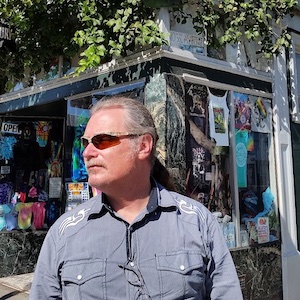 David Horn writes speculative fiction from the edge of the American Midwest, where the skies are wide and the stories stranger than they should be.
His work explores the boundary between memory and myth, often through a lens of ecological or cultural haunting.
He recently published Signals from the Edge, an anthology of original short stories that blend science fiction, folklore, and quiet horror — as well as the satirical Beach Blanket Shark Attack, a loving spoof of 1960s creature features.
When he’s not writing, David works in cybersecurity and plays guitar, mandolin, and banjo with marginal competence and great enthusiasm — sometimes simultaneously, to mixed results.
He lives in Colorado, USA.


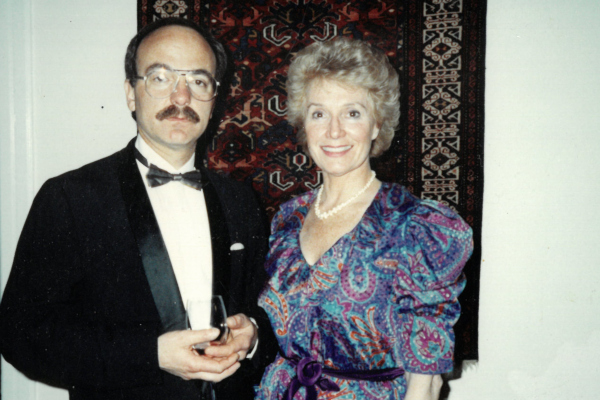
 Tara Campbell is an award-winning writer, teacher, Kimbilio Fellow, fiction co-editor at Barrelhouse, and graduate of American University's MFA in Creative Writing.
 Sarah Jane Justice is an Adelaide-based fiction writer, poet, musician and spoken word artist.
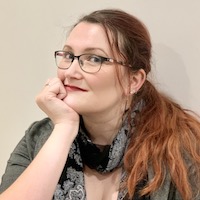 Emma Louise Gill (she/her) is a British-Australian spec fic writer and consumer of vast amounts of coffee. Brought up on a diet of English lit, she rebelled and now spends her time writing explosive space opera and other fantastical things in
 Ed lives with his wife plus a magical assortment of native animals in tropical North Queensland.
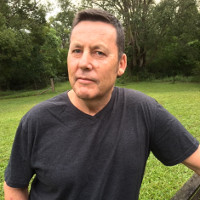 Tim Borella is an Australian author, mainly of short speculative fiction published in anthologies, online and in podcasts.
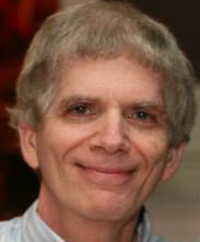 Barry Yedvobnick is a recently retired Biology Professor. He performed molecular biology and genetic research, and taught, at Emory University in Atlanta for 34 years. He is new to fiction writing, and enjoys taking real science a step or two beyond its known boundaries in his
 Mark is an astrophysicist and space scientist who worked on the Cassini/Huygens mission to Saturn. Following this he worked in computer consultancy, engineering, and high energy research (with a stint at the JET Fusion Torus).
 Brian Biswas lives in Chapel Hill, North Carolina, USA.
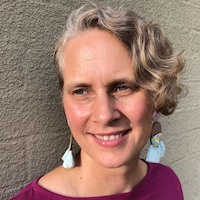 Merri Andrew writes poetry and short fiction, some of which has appeared in Cordite, Be:longing, Baby Teeth and Islet, among other places.
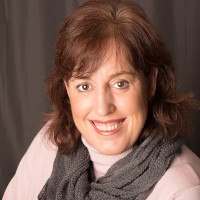 Geraldine Borella writes fiction for children, young adults and adults. Her work has been published by Deadset Press, IFWG Publishing, Wombat Books/Rhiza Edge, AHWA/Midnight Echo, Antipodean SF, Shacklebound Books, Black Ink Fiction, Paramour Ink Fiction, House of Loki and Raven & Drake
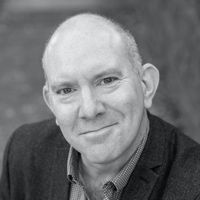 Alistair Lloyd is a Melbourne based writer and narrator who has been consuming good quality science fiction and fantasy most of his life.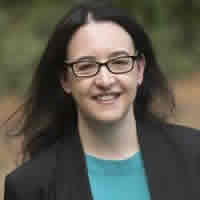
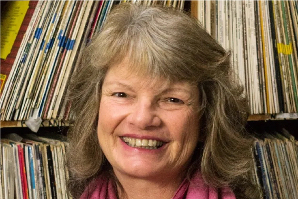 My time at Nambucca Valley Community Radio began back in 2016 after moving into the area from Sydney.