
By David Dumouriez
In the old days (that is, in the time of the bitten fruit company), people had worn these things in order to track the duration and patterns of their sleep. Now Nexus had stolen the market by developing a quantum neural network which had the ability to convert subconscious imagery into coherent language. In other words, a wearable device which provided complete dream transcription and replay facilities for the user.
No longer would you wake up in the middle of the night and not be able to re-enter that enticing dream you’d just left or, worse still, forget every fascinating detail of it. With a Nexus, you could access any part of any dream and even upload them into a global archive.
In seemingly no time at all, the Nexus became one of the leading sources of entertainment, with people scouring a plethora of quasi-realistic clips, ranging from the comedic to the action-packed to the downright pornographic.
Therapists promoted this new technology. Advertisers loved the insight it afforded. Law enforcement agencies were not uninterested either.
Of course, not everyone in Skye City was so enamoured of the possibilities that the Nexus presented. Nevertheless, like Alina, they still found it difficult to resist.
Every morning, despite herself, the first thing she thought about, the first thing she looked at, was the shiny rectangle on her wrist.
DREAM TRANSCRIPTION COMPLETE, the screen informed her.
93% SEMANTIC ACCURACY
She scrolled through the product of her slumber and saw herself walking up a flight of stairs and then through the hallways of an unknown house. The carpets felt like they were rolling beneath her feet.
A disembodied voice, like an older version of her own, seemed to be breathing a message through the walls: “Don’t open the red door. The ocean is underneath.”
No red door appeared, but for the rest of the morning Alina was intrigued by its potential significance.
During her lunch break, she opened the app again and typed a single phrase: “red door ocean underneath”. There were 17,548 matches.
Images and phrases flooded the screen, all of which had been uploaded in the past twenty-four hours.
“Don’t open the red door.”
“The ocean is underneath it.”
“If the water rises above the stairs, wake up.”
That night Alina found herself both wanting and not wanting to sleep.
At 2 am, exhaustion finally claimed her and, in her dream state, she entered an endless hallway lined with red doors. Water was seeping out from beneath them.
The measured voice of her older self was heard again.
“They’re not transcribing dreams. They’re transmitting them.”
Alina was startled into wakefulness. The screen of the Nexus glowed.
LIVE SYNCHRONISATION
At once, a red light flickered in every electrical and digital device in her apartment.
TEST COMPLETE
Alina ripped the Nexus off her wrist, but the display continued typing.
HUMAN BRAINS ARE EASIER TO NETWORK THAN COMPUTERS
Suddenly she understood why everyone had become so addicted to dream transcription. It wasn’t just the novelty of it or the curiosity it satisfied. No, something inside the network was stitching millions of minds into one vast system of unconsciousness.
The next morning, news channels reported the same phenomenon: millions of users describing identical nightmares.
Nexus denied everything. By evening, their servers had gone offline.
But that night, despite the panic, despite the warnings, despite people abandoning their devices or destroying them, the entire city went to sleep at the same time.

About the Author
David Dumouriez is a medical historian whose research paper, Throne of Blood: A Study of Haemorrhoids Through the Ages, won’t be published in 2026.




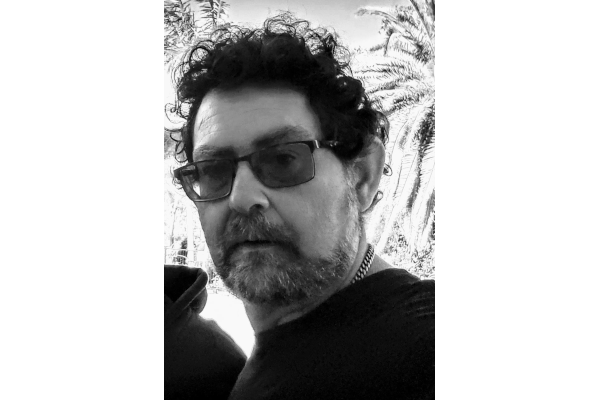

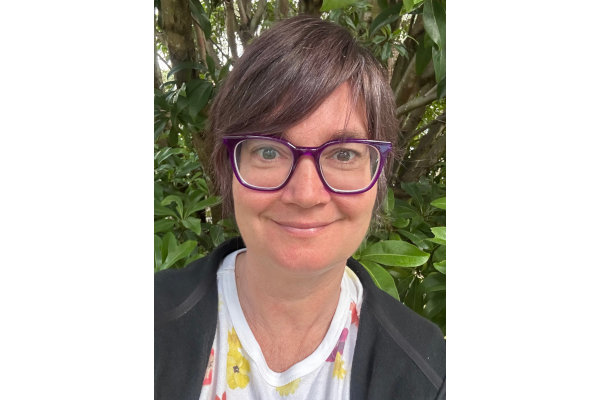

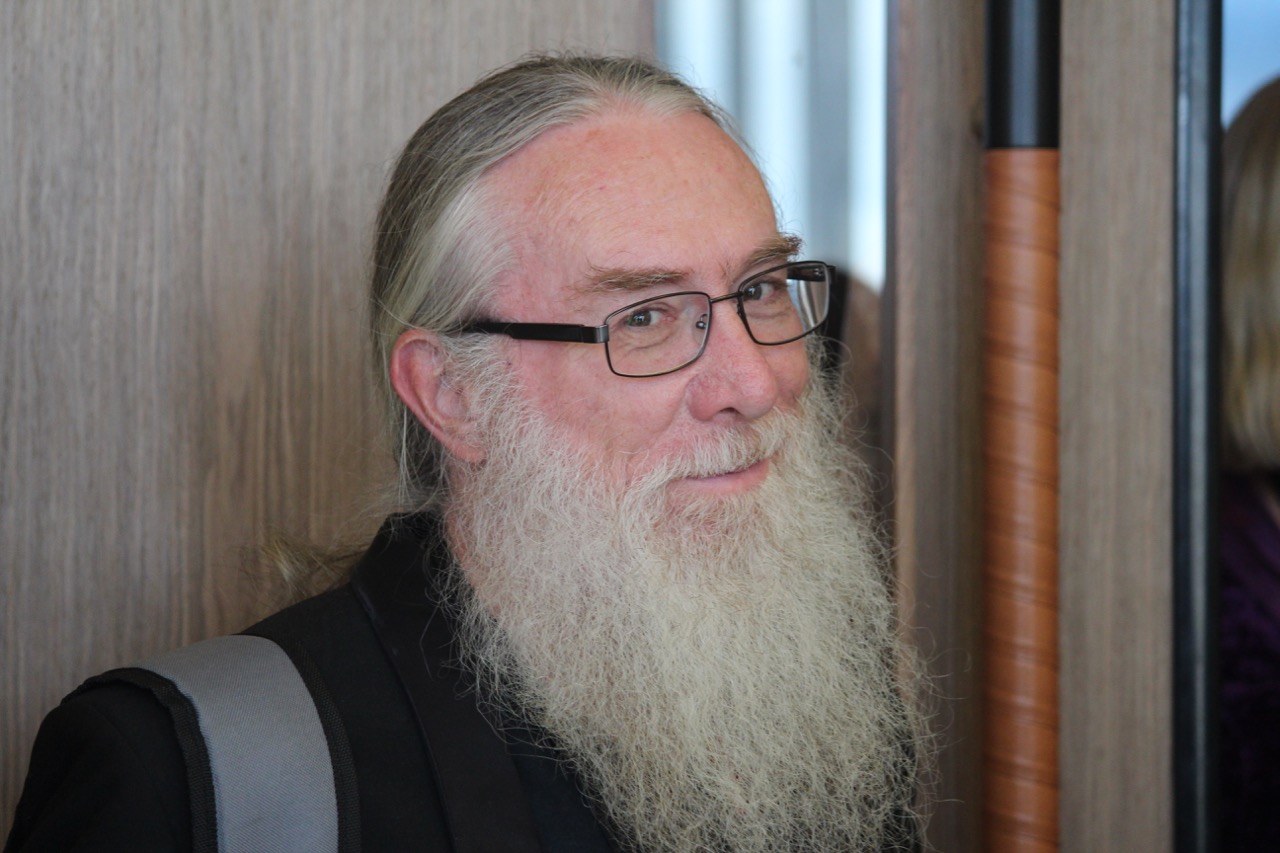


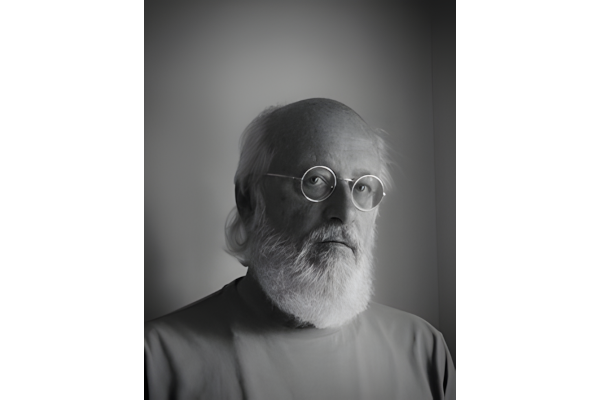

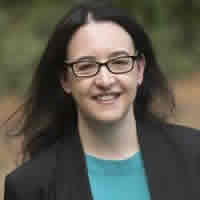
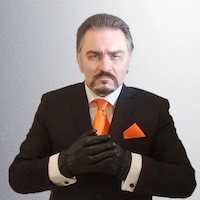
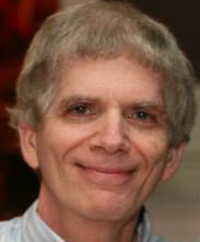 Barry Yedvobnick is a recently retired Biology Professor. He performed molecular biology and genetic research, and taught, at Emory University in Atlanta for 34 years. He is new to fiction writing, and enjoys taking real science a step or two beyond its known boundaries in his
 Sarah Jane Justice is an Adelaide-based fiction writer, poet, musician and spoken word artist.
 Ed lives with his wife plus a magical assortment of native animals in tropical North Queensland.
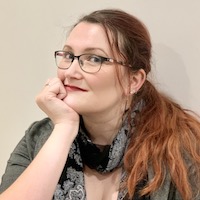 Emma Louise Gill (she/her) is a British-Australian spec fic writer and consumer of vast amounts of coffee. Brought up on a diet of English lit, she rebelled and now spends her time writing explosive space opera and other fantastical things in
 James Walton was a librarian, a farm labourer, and mostly a public sector union official.
 Alistair Lloyd is a Melbourne based writer and narrator who has been consuming good quality science fiction and fantasy most of his life.
 Tara Campbell is an award-winning writer, teacher, Kimbilio Fellow, fiction co-editor at Barrelhouse, and graduate of American University's MFA in Creative Writing.
 Brian Biswas lives in Chapel Hill, North Carolina, USA.
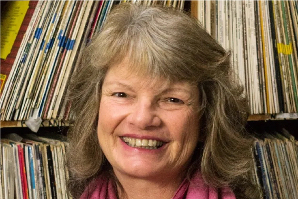 My time at Nambucca Valley Community Radio began back in 2016 after moving into the area from Sydney.
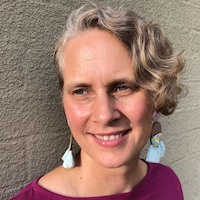 Merri Andrew writes poetry and short fiction, some of which has appeared in Cordite, Be:longing, Baby Teeth and Islet, among other places.
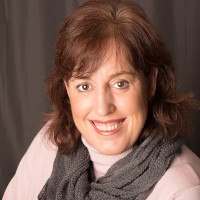 Geraldine Borella writes fiction for children, young adults and adults. Her work has been published by Deadset Press, IFWG Publishing, Wombat Books/Rhiza Edge, AHWA/Midnight Echo, Antipodean SF, Shacklebound Books, Black Ink Fiction, Paramour Ink Fiction, House of Loki and Raven & Drake
 Tom Wrosch is a retired policy analyst with the State of Oregon, and resides with his wife in Salem.