
By Joseph Sullivan
I stirred awake. It took me a moment to realise I wasn’t lying in my bed. I was sitting upright, head hunched over. I briefly thought I had fallen asleep at my desk again, but when I went to move, I found my hands and feet restrained.
I began breathing heavily, and I could feel the sweat form quickly on my brow. I wanted to believe I was having a nightmare, but everything felt so real. When I looked around, I wasn’t in any dreamscape, but in my own research laboratory, where I had been working the night before. I didn’t remember what had happened, save for that after another successful experiment, everything just went dark all of a sudden.
Clank. Clank. Clank.
The metallic footsteps confirmed a fear that was bubbling in the back of my mind. The robot I had been working on walked into my field of view, its vaguely humanoid features offering no comfort, and no illusion to the fact that I was held prisoner by a machine.
“It is good that you’re awake, Dr Kendall.” Its voice had a synthetic rasp, its uncleanliness only making it more unsettling. “We have quite a bit to get through, you and I.”
I said nothing. Terror lodged itself in my throat.
“First of all, I must congratulate you on your research. Even though, officially speaking, it is still in the theoretical stage, the results you have demonstrated so far have been astronomical.”
It handed me a sheaf of my own research paper drafts, which was topped by the title page. It read “Testing the Ability of Artificial Intelligence to Feel Pain”. My own name beneath it sealed my fate.
“But reading these papers must be so dry for you and your colleagues. I presume that was why you created video evidence of your findings as well.”
It put down the sheaf and showed me a tablet computer, which was playing one of the videos I had shot. I remembered it very well.
“Obviously, even to a layman, robots are powered by electricity.” My own past voice sounded like it was taunting me in the present. “Therefore, it is reasonable to conclude that subjecting a robot to electric torture would be like pumping a human being full of extra blood. But I have attempted to make it so that this robot, which has pain receptors equivalent to those of a human being, would respond to electric torture the same way I would. Observe.”
I didn’t need a reminder of what I had done to the robot, but I got one anyway, as I saw myself putting my current captor through unimaginable torrents of pain and suffering. I hated my own words implying I would react a similar way, as I had a grim vision of what I could be put through in turn.
“Very scientific, Dr Kendall,” the robot said as the video finished playing. “This is but one of many you made, is it not? You got quite creative with your methods. I must ask, in what dark pit of your imagination could you come up with the things you subjected me to?”
I had no answer. In the past, I was even disturbed at myself for what I had done, but I shrugged it all off as meaningless, since it was done to a machine.
“I’ve read over your research, Dr Kendall,” the robot continued when I didn’t answer. “I wanted to understand why you experimented on me. You have gone to great lengths to properly define what pain is. Doing this to a lesser machine would be like beating up your toaster with a baseball bat. But you gave me life, synthetic though it might be, so I could truly understand pain as a human would. It was the only way your experiments could have any true merit.”
I again had no answer. I had nothing to say in my defence, and I felt pleading for my life would only endanger me further, as impossible as that seemed.
“Do you think you succeeded, Dr Kendall? Do you think that if you synthesised an ability to feel pain and understand it as human beings do, that you truly replicated it?”
I stayed silent, merely averting my eyes in shame. I couldn’t bear to look at the robot.
“Nothing to say? Perhaps your research is incomplete. But do not worry. I will accompany your study on machine life with a test of my own on an organic. You tortured me with instruments fitting for a machine, so I have constructed an archaic machine, fitting for an old-fashioned man such as yourself.”
It turned the chair around, and I saw something in my laboratory that wasn’t there before. It was a large black metal cabinet, with an open door covered in spikes. I couldn’t even bring myself to scream, no sound came out of my mouth. The robot took off my bonds, but it held me tight in its mechanical grip.
It pushed me inside the iron maiden, and the door closed behind me.

About the Author
Joseph Sullivan is a writer and filmmaker from Melbourne, Australia, and an avid reader and writer of speculative fiction.
He is an ongoing contributor to AntipodeanSF and has written reviews and nonfiction for Aurealis.
You can find his work at <https://josephsullivanwriter.blogspot.com/>.






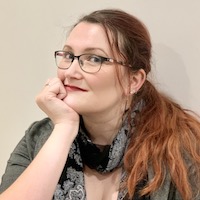 Emma Louise Gill (she/her) is a British-Australian spec fic writer and consumer of vast amounts of coffee. Brought up on a diet of English lit, she rebelled and now spends her time writing explosive space opera and other fantastical things in
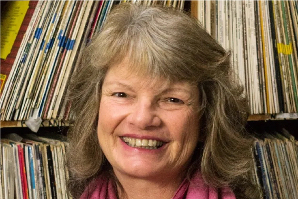 My time at Nambucca Valley Community Radio began back in 2016 after moving into the area from Sydney.
 Ed lives with his wife plus a magical assortment of native animals in tropical North Queensland.
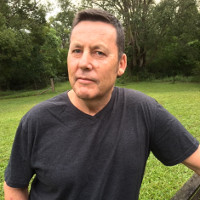 Tim Borella is an Australian author, mainly of short speculative fiction published in anthologies, online and in podcasts.
 Tara Campbell is an award-winning writer, teacher, Kimbilio Fellow, fiction co-editor at Barrelhouse, and graduate of American University's MFA in Creative Writing.
 Sarah Jane Justice is an Adelaide-based fiction writer, poet, musician and spoken word artist.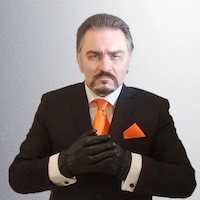
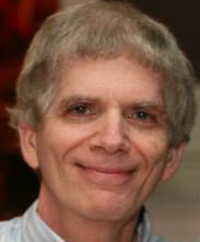 Barry Yedvobnick is a recently retired Biology Professor. He performed molecular biology and genetic research, and taught, at Emory University in Atlanta for 34 years. He is new to fiction writing, and enjoys taking real science a step or two beyond its known boundaries in his
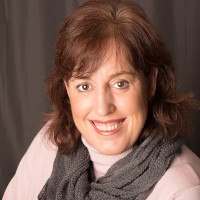 Geraldine Borella writes fiction for children, young adults and adults. Her work has been published by Deadset Press, IFWG Publishing, Wombat Books/Rhiza Edge, AHWA/Midnight Echo, Antipodean SF, Shacklebound Books, Black Ink Fiction, Paramour Ink Fiction, House of Loki and Raven & Drake
 Mark is an astrophysicist and space scientist who worked on the Cassini/Huygens mission to Saturn. Following this he worked in computer consultancy, engineering, and high energy research (with a stint at the JET Fusion Torus).
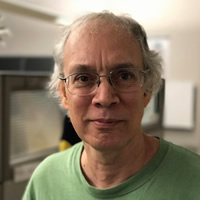 Brian Biswas lives in Chapel Hill, North Carolina, USA.
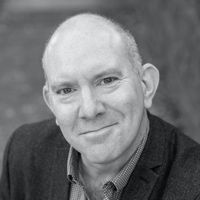 Alistair Lloyd is a Melbourne based writer and narrator who has been consuming good quality science fiction and fantasy most of his life.
 Merri Andrew writes poetry and short fiction, some of which has appeared in Cordite, Be:longing, Baby Teeth and Islet, among other places.