
By Steven French
Here, now, at the end of all things and even of those things that aren’t quite things, Zahak found it. Zahak, whose name had once reverberated down to the galactic core and back but which, like its owner, had progressively diminished during the course of an over-long life, now found themself contemplating the one other object left standing as the clock ran down on the universe.
Retaining its form, still, through the magic of advanced technology, the ancient desk sat facing out across the void, its solidity preserved, just, by some of the very last fermions yet undecayed. As all became bosonic and the current aeon inched towards the space-like hypersurface marking the boundary with the universe to come, Zahak wearily manoeuvred themself behind it and, with their fine-motor manipulators, opened the top drawer. Carefully taking out the future-proofed device that had begun its existence in the form of a notebook, they drew on their own dwindling energy resources to boot it up.
Time passed, at least according to some internal clock, as the approaching conformal boundary became squashed and space-time rescaling took place. Idly, Zahak noted the contours of the sector that was about to be born, represented by the emerging solution to the underlying equations that had been written down repeatedly, across the cosmos, by, among others, a wild-haired humanoid in one galaxy, a multi-limbed arthropod in another and a sentient plasma cloud in a third.
Eventually, what might in ages past have been called a ‘screen’ pushed some of the last remaining photons out into the void and Zahak scrolled through the comments left by prior visitors, following a tradition that stretched back over billions of years. There were the usual tedious variants on ‘Gorn wuz ‘ere’ and ‘Odo and Kira 2gether 4ever’, as well as, more recently, ‘Had a wonderful time here. Sad to see it all go.’ As the material of the desk itself began to disintegrate and join the background emissions, Zahak’s receptors finally located what they had been scanning for. There it was, their poignant lament, left long before as a tenuous memorial. At the time they had scoffed at Kator’s insistence that they had ‘lost’ Peitron, since they both knew exactly where the latter was — spaghettified within a rogue black hole after stupidly trying to surf the wake it had left ploughing through the inter-galactic gas clouds. Zahak’s receptor clusters shook as they reflected on how juvenile it all now seemed.
“Ah, Peitron, Peitron …” Zahak murmured.
Peitron who had always grown so bored so very quickly, who had leapt from one extreme intergalactic experience to the next, while both Zahak and Kator had always just pulled back from the edge, for fear of tipping over into the abyss. In the end, though, here, now, looking back down the ages, Zahak wondered, what had been the point? That dreaded existential edge had slipped past anyway, leaving them as the last remaining witness. For Kator too was gone, blasted into their component elementary particles by an errant cosmic ray burst — proof, if ever it was needed, that if you hung around long enough, even the most improbable of possibilities would collapse down into an essence-shredding actuality.
Shaking their clusters gently once again, Zahak scrolled down even further through the entries, back to those left in the merest blink of a photon receptor after the desk had been deposited by a small group of extinct bipeds at the top of some weather-beaten hill on a medium-sized rocky planet, spinning around some obscure yellow dwarf, way off towards the galactic outer rim. Left there for ‘reasons’, apparently, also long-since lost. Maybe for fun or just to savour the weirdness but either way Zahak felt that Peitron, of all entities, would have appreciated the gesture. Of course, both the desk and its notebook had passed through multiple iterations, some more transformative than others, as the planet and the star and the galaxy itself had all evaporated around it. And still accessible after all this time were the scribbled messages that visitor after visitor had left for some envisaged but vanished posterity. Among them, Zahak’s sensors caught a particular sequence of symbols and they paused in their scrolling to decode them.
“I have seen things you people wouldn’t believe,” someone had inscribed.
“Indeed, I have,” Zahak thought to themself, gazing out at the thinning spread of gravitational radiation, as they fought to prevent their own matter from corroding into the spill of neutrinos and photons for just a moment longer, if indeed durations of any length could be said to have physical meaning at that point.
“All these …” Zahak grimaced with frustration as holes appeared in the text and the holographic edges of the screen began to curl and tatter.
“… lost, like tears in the rain …”, they finally managed to decipher.
As the conformal scaling took hold and the boundary between aeons loomed, Zahak came to a decision. Summoning the final remnants of energy, at the expense of their own structural integrity, they retuned their quantum tweezers to imprint onto the configuration-space profiles of the last dying particles in the notebook, a simple message to be carried into the low-entropy beginning of the new cosmos.
“Not everything will be lost”, they thought to themselves, as the last morsel of their sentience was in turn swept away to join the bosonic flood.

About the Author
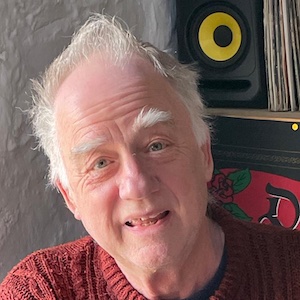 Steven French is a retired university lecturer with a background in the history and philosophy of physics.
He lives in West Yorkshire, U.K. and has been writing short stories for five years, with pieces appearing in such venues as Illustrated Worlds, Savage Planets and, recently, State of Matter.
Some of Steven's recent other short stories can be found here:
’That Soft Exhalation’, Black Petals Issue 111, Spring 2025 <https://blackpetalsks.tripod.com/blackpetalsissue78-2/>
‘When You Gaze Into The Void’, Savage Planets Vol. 5 Issue 2 April 2025 <https://savageplanets.com/newsstand>
‘A Moonlit Meeting’, Suburban Witchcraft Issue 8, <https://suburbanwitchcraft.com/issue8>




 Emma Louise Gill (she/her) is a British-Australian spec fic writer and consumer of vast amounts of coffee. Brought up on a diet of English lit, she rebelled and now spends her time writing explosive space opera and other fantastical things in
 My time at Nambucca Valley Community Radio began back in 2016 after moving into the area from Sydney.
 Mark is an astrophysicist and space scientist who worked on the Cassini/Huygens mission to Saturn. Following this he worked in computer consultancy, engineering, and high energy research (with a stint at the JET Fusion Torus).
 Geraldine Borella writes fiction for children, young adults and adults. Her work has been published by Deadset Press, IFWG Publishing, Wombat Books/Rhiza Edge, AHWA/Midnight Echo, Antipodean SF, Shacklebound Books, Black Ink Fiction, Paramour Ink Fiction, House of Loki and Raven & Drake
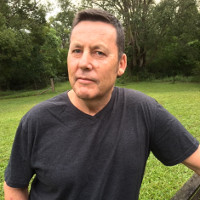 Tim Borella is an Australian author, mainly of short speculative fiction published in anthologies, online and in podcasts.
 Alistair Lloyd is a Melbourne based writer and narrator who has been consuming good quality science fiction and fantasy most of his life.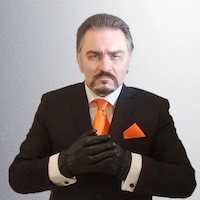
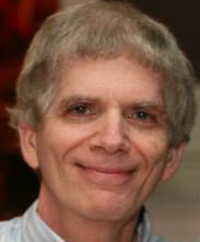 Barry Yedvobnick is a recently retired Biology Professor. He performed molecular biology and genetic research, and taught, at Emory University in Atlanta for 34 years. He is new to fiction writing, and enjoys taking real science a step or two beyond its known boundaries in his
 Ed lives with his wife plus a magical assortment of native animals in tropical North Queensland.
 Sarah Jane Justice is an Adelaide-based fiction writer, poet, musician and spoken word artist.
 Merri Andrew writes poetry and short fiction, some of which has appeared in Cordite, Be:longing, Baby Teeth and Islet, among other places.
 Brian Biswas lives in Chapel Hill, North Carolina, USA.
 Tara Campbell is an award-winning writer, teacher, Kimbilio Fellow, fiction co-editor at Barrelhouse, and graduate of American University's MFA in Creative Writing.